
HYDRA-G 205kW Hydrogen Fuel Cell System for Heavy-Duty & MW-Scale Powe

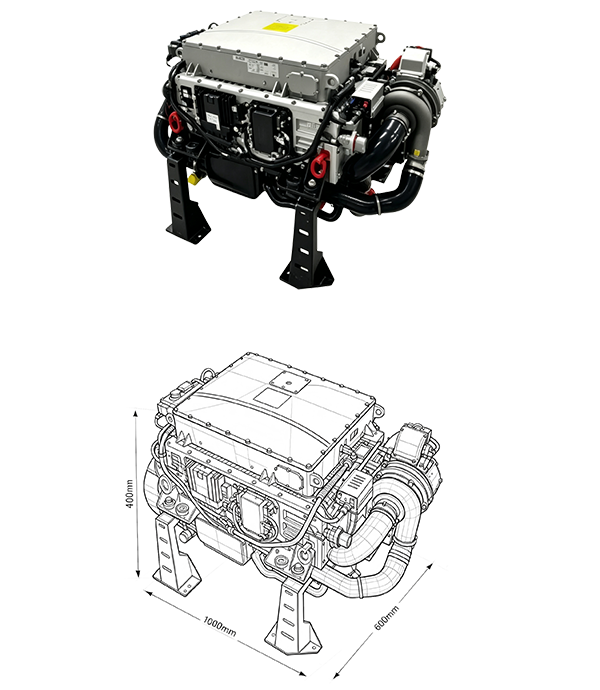
A 205kW liquid-cooled PEM fuel cell system engineered for heavy-duty vehicles, mining, marine and MW-scale stationary power. Featuring 702W/kg mass power density, 4.71kW/L volumetric power density and parallel-ready architecture for multi-MW deployment.
205kW Rated Power | 702W/kg | 4.71kW/L | -40°C to +60°C | IP67 | 70MPa CGH₂

205kW Hydrogen Fuel Cell System Advantages

702W/kg High Power Density with Metallic Bipolar Plates

•702W/kg mass density
•4.71kW/L volumetric density

Multi‑MW Scalability

•Parallel‑ready from single •205kW to Multi‑MW plant with synchronized BoP control

Industrial‑Grade Durability

•IP67‑rated
•CAERI Type Approval
•Mining / Marine vibration & salt spray resistant

Wide Thermal Envelope

•-40°C to +60°C
•Reliable cold‑start & operation
•Zero downtime in extreme climates

205kW PEM Fuel Cell Technology for Heavy-Duty Operations

The HYDRA-G 205kW represents a structural leap over traditional graphite‑plate fuel cells. Metallic bipolar plates significantly reduce stack volume while increasing shock resistance — critical for off‑highway heavy machinery.

⚡ 5.1kW/s Dynamic Response for Heavy-Duty Loads
A dynamic response of up to 5.1kW/s supports rapid load changes and consistent power delivery during heavy-lift and off-highway operation.
 
🔌 330–750V DC High-Voltage Output
The 330–750V DC output range supports direct integration with industrial DC buses, electric drivetrains and MW-scale power conversion systems.
 
🛠️ Integrated Balance of Plant (BoP)
Integrated air, hydrogen and thermal management simplifies system integration and reduces the complexity of deploying high-power fuel cell systems.

205kW Hydrogen Fuel Cell Applications for Industry, Marine & Mining

205kW Hydrogen Fuel Cell for Data Centers & Microgrids


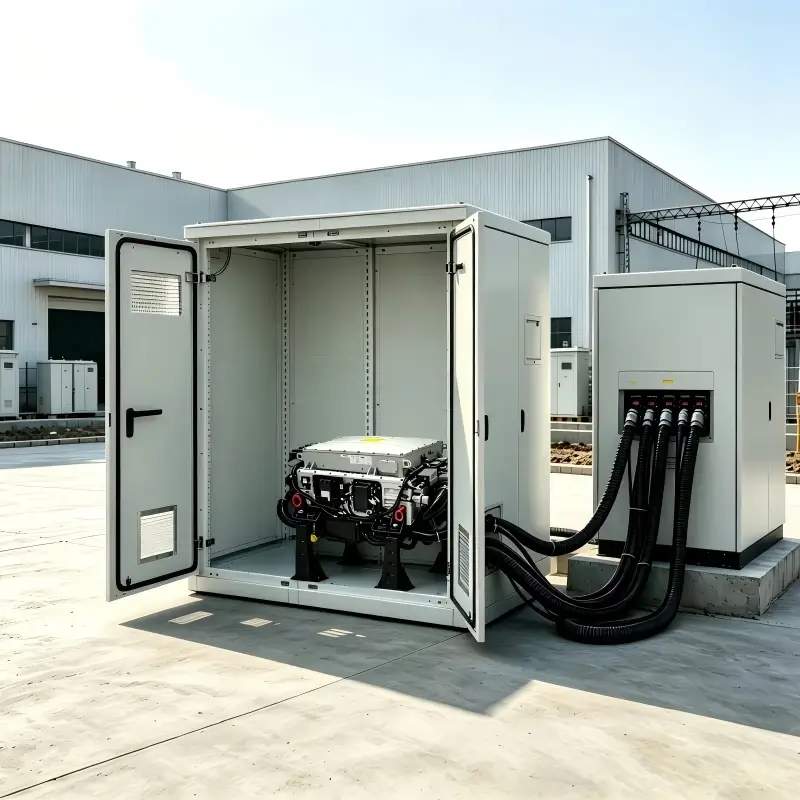
Multiple 205kW modules can be paralleled for MW-scale stationary power, including data centers, microgrids, backup power and remote industrial sites.

205kW Hydrogen Fuel Cell for Marine & Port Operations


Zero‑emission power for harbor craft, ferries, and island grids. IP67 salt‑spray protected.

205kW Hydrogen Fuel Cell for Mining Haul Trucks


The 702W/kg power density helps reduce powertrain mass while supporting demanding mining haul truck and off-highway applications across extreme temperature conditions.
HYDRA‑G 205kW vs. Traditional Power

FeatureHYDRA‑G 205kWLeading alternativesDiesel GensetLarge Li‑Ion ESS
Mass Power Density 702W/kg ~350W/kg Low (fuel logistics heavy) <200W/kg (system level)
Volumetric Power Density 4.71kW/L ~2.0kW/L Low Very Low
Refuel / Recharge 8–20 min (70MPa CGH₂) 8–20 min 5–15 min 2–8 hours
Cold Start -40°C -25°C Requires pre‑heat Limited below 0°C
Scalability Parallel‑ready MW‑scale Modular Single unit Single unit
Operational Life Industrial Duty Cycle — Frequent mechanical wear Capacity fade over cycles
Maintenance Low (no oil) Low High (oil/filters) Medium (degrad.)
Stealth / Comfort Silent / Low Vibration Low Noise Loud / High Vibration Silent
Emissions Zero (H₂O) Zero (H₂O) CO₂, NOx, PM High carbon footprint (lifecycle)
Certification CAERI ISO/SAE — —
Protection IP67 IP66 — —

HYDRA‑G 205kW Specifications

ParameterValue
Rated Power 205 kW
Stack Technology Metallic Bipolar Plate
Mass Power Density 702 W/kg
Volumetric Power Density 4.71 kW/L
Working Voltage 330V – 750V DC
Operating Temp -40°C to +60°C
Hydrogen Pressure 70MPa CGH₂ Ready
Protection Rating IP67
Cooling Method Liquid‑Cooled
Certification CAERI Type Approval
HYDRA-G 205KW(Specifications)

Frequently Asked Questions

Q: Why does HYDRA-G 205kW use metallic bipolar plates instead of graphite plates?
A: Metallic bipolar plates can provide higher mechanical strength and enable compact high-power stack designs. For heavy-duty applications, they can help reduce system size and improve resistance to vibration and mechanical shock.
A: Yes. Multiple 205kW modules can be configured in parallel to build MW-scale power systems. The appropriate system configuration depends on load profile, hydrogen supply, redundancy requirements and site conditions.
A: The 330–750V DC range supports direct integration with many industrial DC buses, electric drivetrains and power conversion systems, depending on system architecture.
A: Project economics depend on hydrogen price, diesel price, utilization, maintenance, infrastructure and local energy costs. Hydrogen fuel cell systems can reduce mechanical maintenance and eliminate onsite combustion emissions, while the overall TCO should be evaluated based on the specific application and location.
A: Yes. Full integration support — COPV/Type IV tank selection, BoP optimization, containerization, and grid interconnection design.

Scale Your Zero‑Emission Power to Megawatt Level

SOLIDHYDRO supports MW-scale hydrogen power projects from fuel-cell module selection and hydrogen storage integration to Balance of Plant optimization and system design.

Talk to SOLIDHYDRO

Need technical information, product specifications or application support? Contact our engineering team.

Whatsapp

+86 19813722676

Socials

Click or drag files to this area to upload.You can upload up to 5 files.