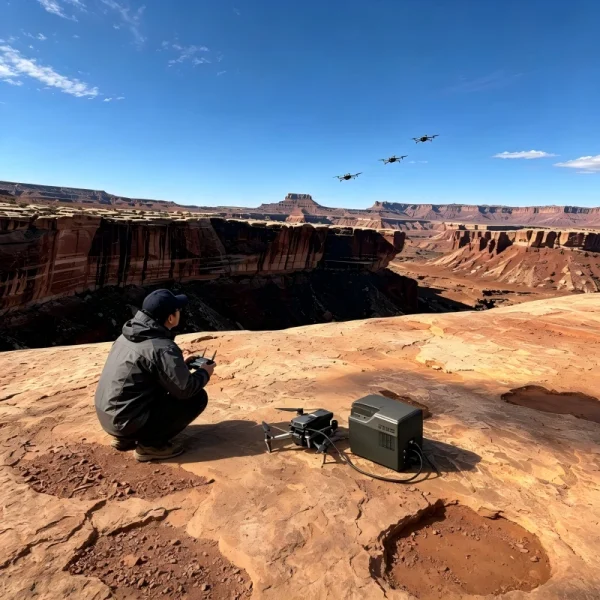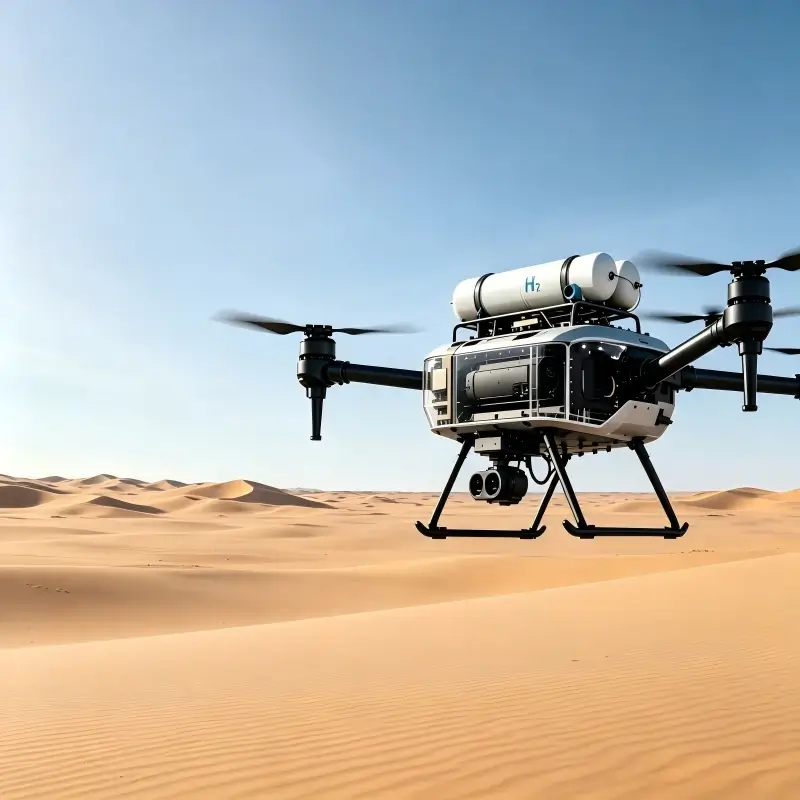
Hydrogen fuel cell systems can be considered for UAV missions where endurance, continuous power, payload capacity, or operational availability are important design requirements.
UAV Hydrogen Fuel Cell Applications
Long-Endurance Multirotor UAVs
Multirotor UAVs used for inspection, surveillance, mapping, communications, and other extended missions can benefit from an energy architecture designed around continuous fuel-cell power.
The fuel cell can provide the base electrical load while a battery handles short-duration peak-power requirements.Fixed-Wing UAVs
Fixed-wing UAVs can operate efficiently during cruise, making them potential candidates for hydrogen fuel-cell systems designed around continuous electrical power and extended endurance.
The appropriate configuration depends on cruise power, payload, aircraft size, and hydrogen-storage capacity.VTOL UAVs
VTOL aircraft combine vertical takeoff and landing with efficient forward flight.
Because VTOL operations can require higher power during takeoff, landing, and transition, a hybrid fuel-cell and battery architecture may be appropriate for some platforms.BVLOS UAV Operations
Beyond Visual Line of Sight (BVLOS) missions can require longer flight duration and higher operational availability than short-range UAV missions.
Hydrogen fuel-cell systems can be evaluated for applications such as:• Infrastructure inspection
• Pipeline and power-line inspection
• Remote-area monitoring
• Mapping and surveying
• Communications relay
• Persistent surveillance
Actual endurance depends on the complete UAV system, including aircraft configuration, payload, hydrogen storage, weather, flight profile, and power consumption.