مدونة

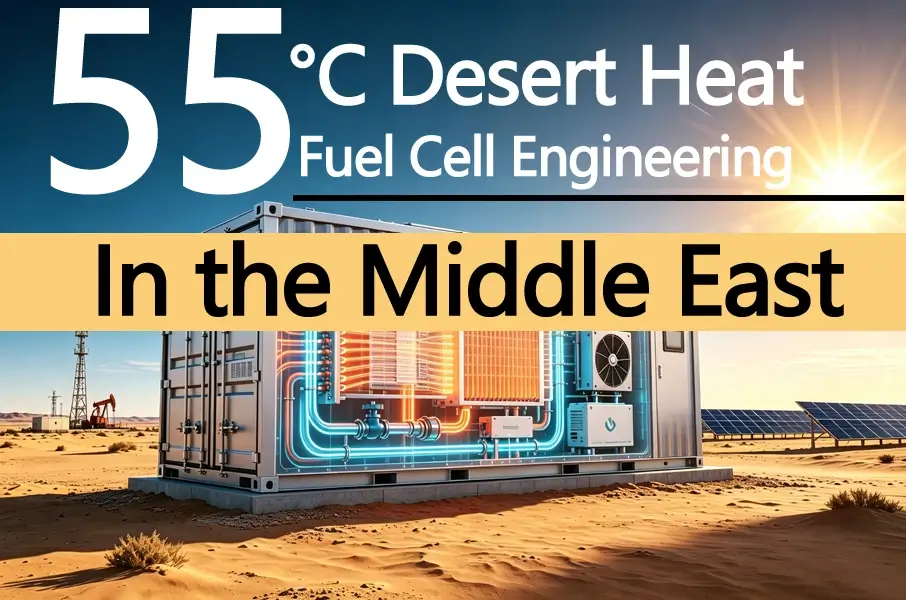
أداء خلايا الوقود في الشرق الأوسط: هندسة مصممة لتحمل حرارة الصحراء التي تصل إلى 55 درجة مئوية

When ambient temperatures reach 55°C, conventional power systems face a fundamental engineering challenge: generating electricity is only part of the problem. The system must also reject heat, protect critical components, control parasitic power consumption, and maintain stable net output under extreme thermal conditions. This is particularly important across the Middle East, where remote oil and […]
أداء خلايا الوقود في الشرق الأوسط: هندسة مصممة لتحمل حرارة الصحراء التي تصل إلى 55 درجة مئوية قراءة المزيد »

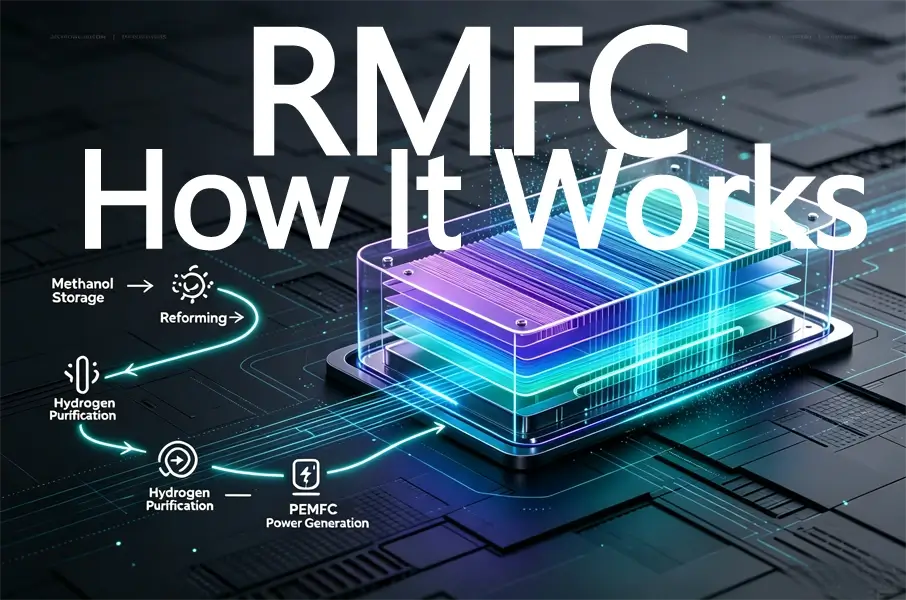
خلية الوقود الميثانولية المُحسَّنة (RMFC): كيف تعمل

A Reformed Methanol Fuel Cell (RMFC) is a fuel-cell power system that converts liquid methanol into hydrogen and then uses that hydrogen to generate electricity through a proton exchange membrane fuel cell (PEMFC). Unlike a conventional hydrogen fuel cell that requires hydrogen to be stored in a high-pressure cylinder, an RMFC system stores energy in

خلية الوقود الميثانولية المُحسَّنة (RMFC): كيف تعمل قراءة المزيد »

سلامة الهيدروجين في الحالة الصلبة: الاختبارات الباليستية، ومقاومة السقوط، والنقل وفقًا لمعيار الأمم المتحدة رقم 3468

“Hydrogen? Doesn’t that explode?” For military, law-enforcement, and tactical-power users, this is one of the first questions that comes up when hydrogen fuel cells are discussed. The concern is understandable. Conventional hydrogen storage often means compressed gas at hundreds of bar, which introduces pressure-vessel, impact, and transport considerations that are difficult to ignore in field

سلامة الهيدروجين في الحالة الصلبة: الاختبارات الباليستية، ومقاومة السقوط، والنقل وفقًا لمعيار الأمم المتحدة رقم 3468 قراءة المزيد »

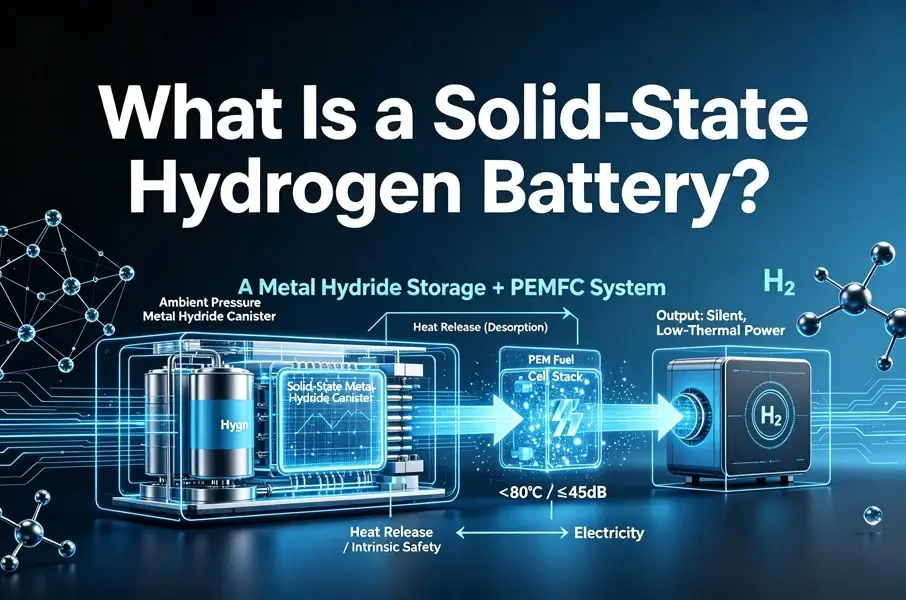
ما هي بطارية الهيدروجين ذات الحالة الصلبة؟ دليل تقني

The term solid-state hydrogen battery is increasingly used to describe next-generation hydrogen energy storage and portable power systems. However, the term can refer to technologies that are fundamentally different from conventional solid-state batteries. In one context, a solid-state battery uses a solid electrolyte to store and release electrical energy electrochemically. In another, a solid-state hydrogen

ما هي بطارية الهيدروجين ذات الحالة الصلبة؟ دليل تقني قراءة المزيد »

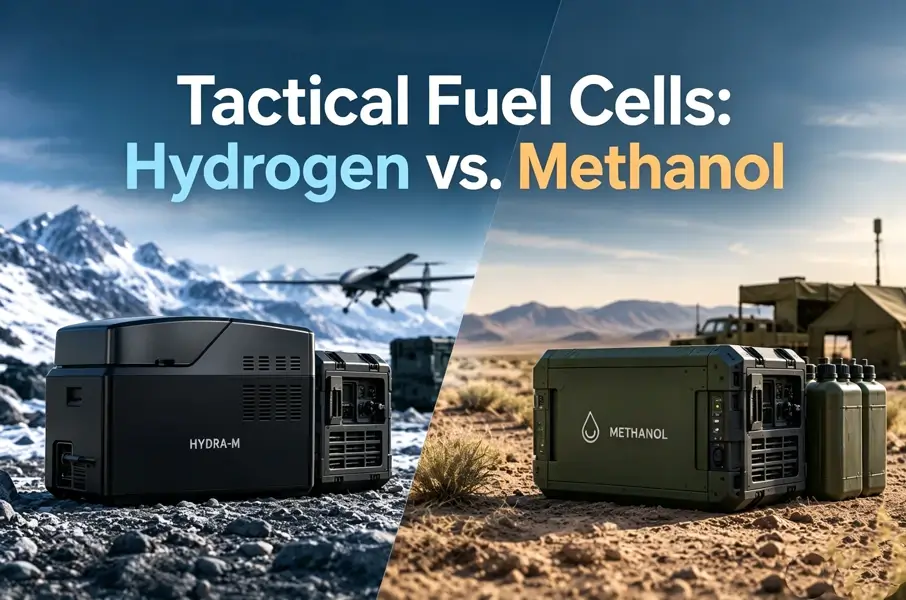
خلايا الوقود التي تعمل بالميثانول مقابل الهيدروجين: مقارنة بين قدرات الطاقة التكتيكية

Introduction A methanol fuel cell is a fuel-cell power system that uses methanol as its primary fuel. Depending on the architecture, methanol can either be converted directly into electricity through a direct methanol fuel cell (DMFC) or first converted into hydrogen and then used by a PEM fuel cell in a reformed methanol fuel cell

خلايا الوقود التي تعمل بالميثانول مقابل الهيدروجين: مقارنة بين قدرات الطاقة التكتيكية قراءة المزيد »

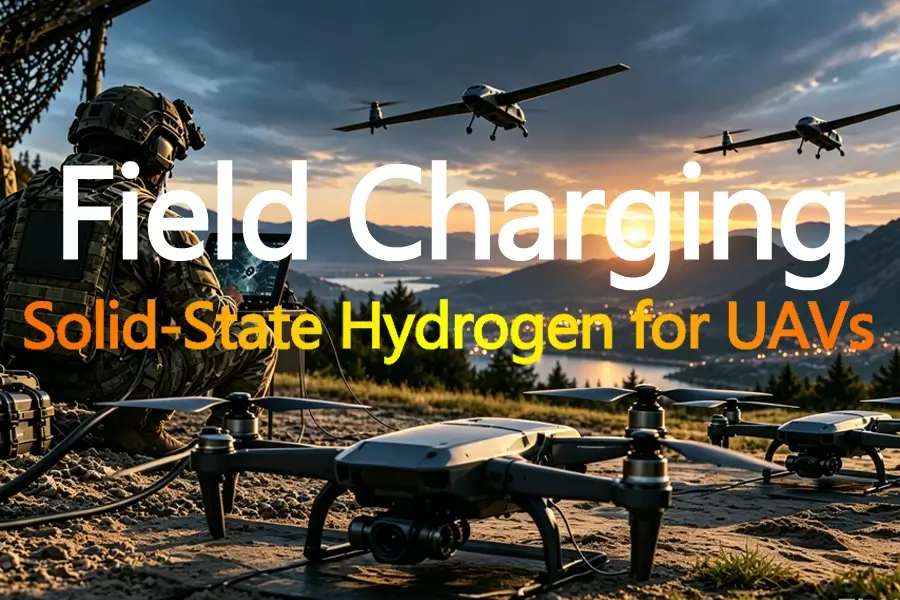
الهيدروجين في الحالة الصلبة للطائرات بدون طيار: نهج جديد للرحلات الجوية طويلة المدى

For many UAV missions, flight endurance is no longer limited by the aircraft itself. It is limited by the amount of usable energy that can be carried, transported, and replenished in the field. A typical battery-powered UAV may complete a short reconnaissance or inspection flight and then require a battery replacement or lengthy recharge before

الهيدروجين في الحالة الصلبة للطائرات بدون طيار: نهج جديد للرحلات الجوية طويلة المدى قراءة المزيد »

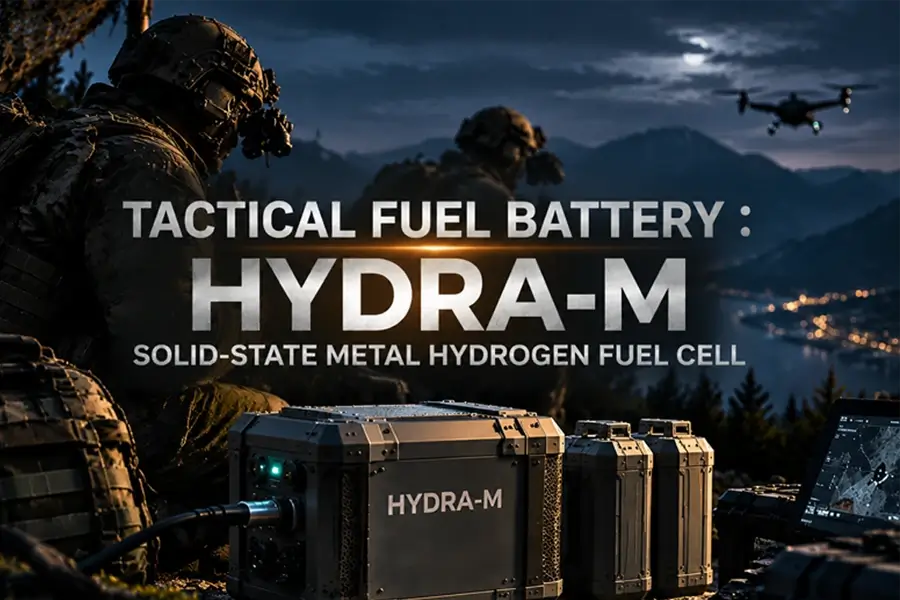
بطارية الوقود التكتيكية: لماذا يتفوق هيدريد المعدن الصلب على الميثانول

Introduction: Tactical Power Requires More Than Energy In tactical operations, power availability can determine mission success. Traditional field power solutions often create new challenges: diesel generators produce significant noise and thermal signatures, while liquid-fuel alternatives such as Direct Methanol Fuel Cells (DMFCs) face limitations related to fuel handling, efficiency, and long-term performance. For modern defense,

بطارية الوقود التكتيكية: لماذا يتفوق هيدريد المعدن الصلب على الميثانول قراءة المزيد »

نظام HYDRA‑G المعياري المتوازي: من المركبات تحت المائية غير المأهولة (UUV) إلى الطاقة من فئة MW

Every power module has its limits. What separates an industrial‑grade system from an infrastructure‑class solution is not the size of a single module — it is the ability to scale like building blocks, adding power as needed without redesigning the entire system. The HYDRA‑G series — 120kW and 205kW PEMFC modules — is engineered for

نظام HYDRA‑G المعياري المتوازي: من المركبات تحت المائية غير المأهولة (UUV) إلى الطاقة من فئة MW قراءة المزيد »

شخص واحد، عبوة واحدة، 5 دقائق — الطاقة المستقلة عن الشبكة من RMFC

The real challenge of off‑grid power is never about “whether it can generate electricity” — it’s about “whether the people can keep up with the power.” A diesel generator can be placed anywhere to generate power. But to keep it running at a remote outpost, border surveillance post, or island base station, you need: regular

شخص واحد، عبوة واحدة، 5 دقائق — الطاقة المستقلة عن الشبكة من RMFC قراءة المزيد »

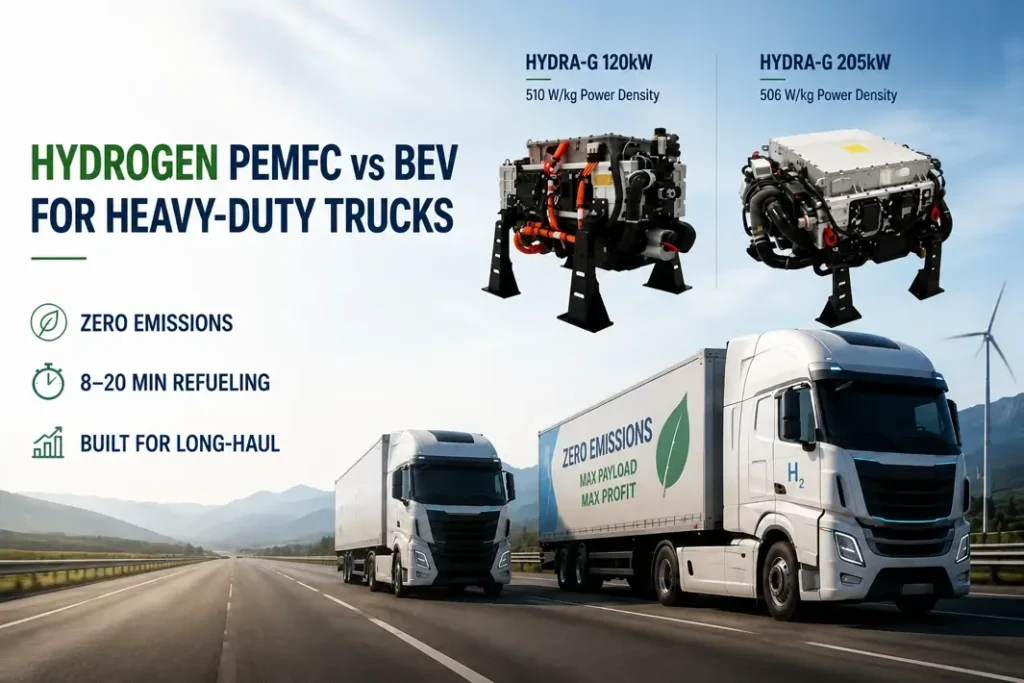
الطريق الثالث: مقارنة بين خلايا الوقود الكهربائية التي تعمل بالهيدروجين (PEMFC) والمركبات الكهربائية البحتة (BEV) في الشاحنات الثقيلة

The heavy‑duty trucking industry faces a decarbonization dilemma that no other transport segment quite matches. Battery‑electric vehicles (BEVs) work well for passenger cars. They work reasonably well for last‑mile delivery vans. But for a Class 8 tractor hauling 40 tonnes across 1,000 kilometres of highway — the physics simply do not cooperate. Hydrogen fuel cell

الطريق الثالث: مقارنة بين خلايا الوقود الكهربائية التي تعمل بالهيدروجين (PEMFC) والمركبات الكهربائية البحتة (BEV) في الشاحنات الثقيلة قراءة المزيد »